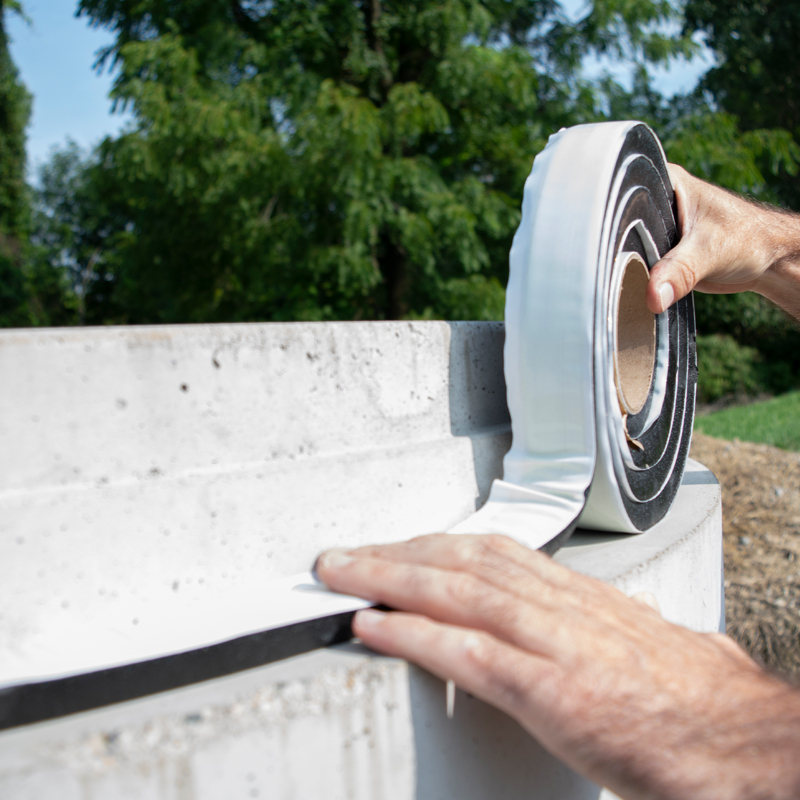
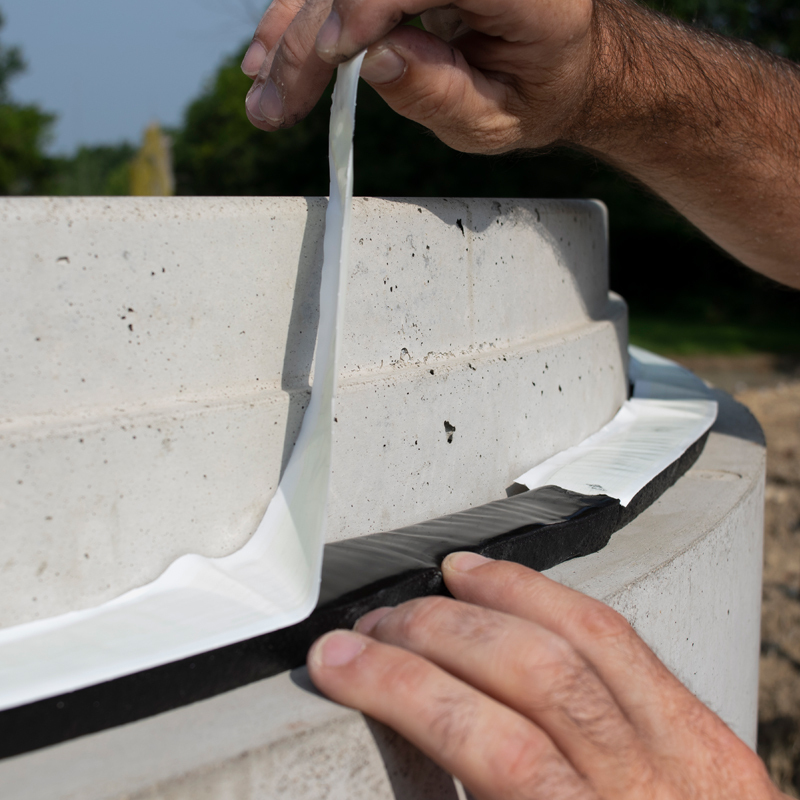
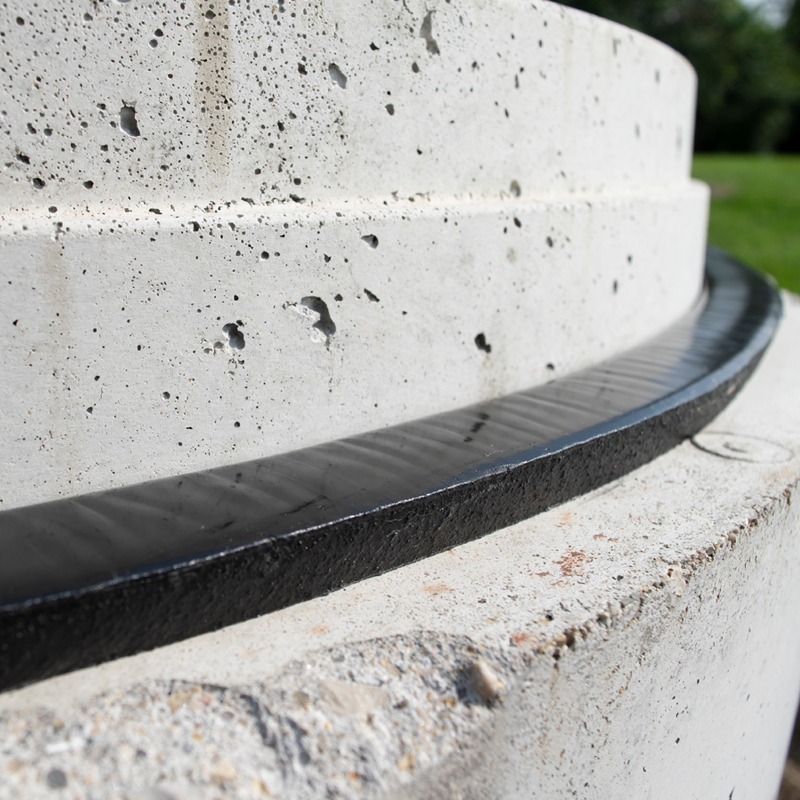
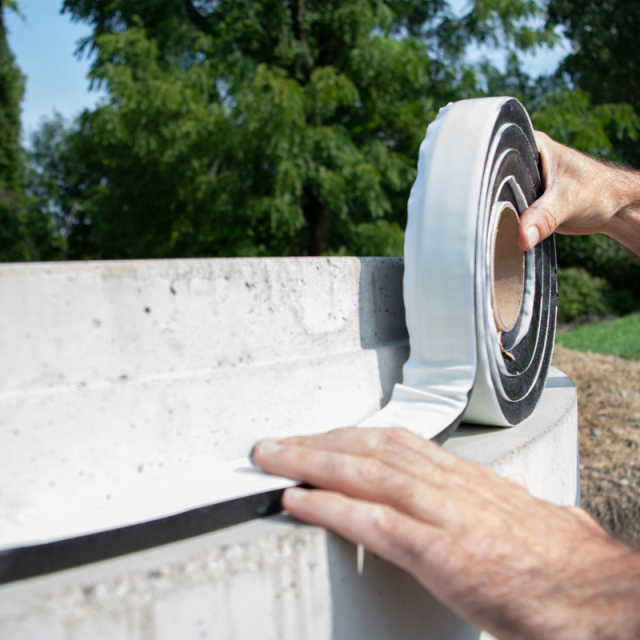
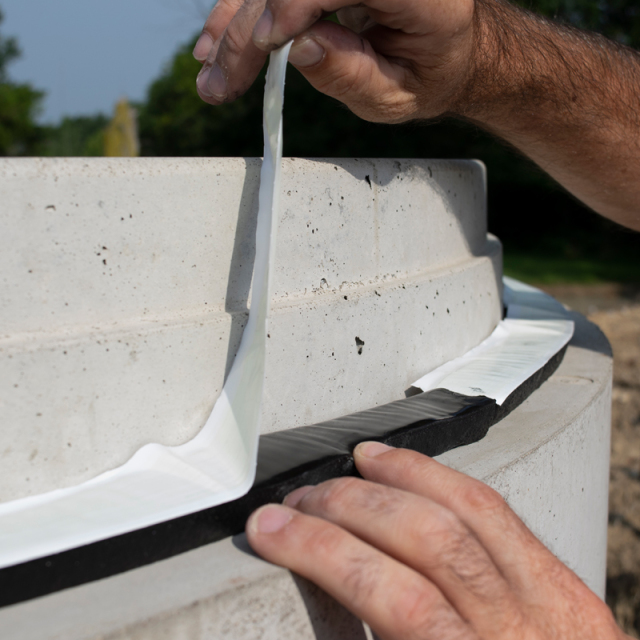
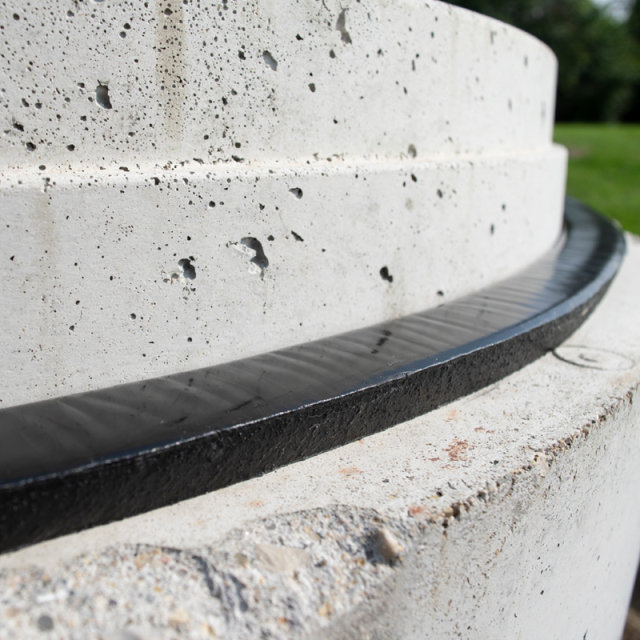
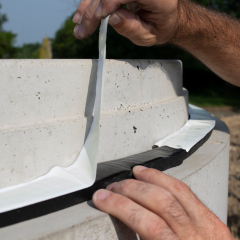
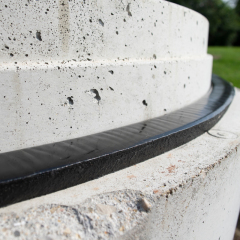
Butyl waterstop for concreteis a high-performance waterproof material specifically designed for concrete structures, primarily used to control moisture penetration and ensure the sealing of concrete joints. Its main component is butyl rubber, which has excellent elasticity and durability.
Applications
Precast concrete wall panel systems
Utility vaults, portable water tanks and box culverts
Sanitary and storm sewer manholes
Pipes (round, oval, flat-base elliptical and arch types)
Butyl Waterstop for Concrete: Advanced Joint Sealing for Critical Infrastructure
Introduction
In modern concrete construction, the integrity of joints represents the most vulnerable point in the overall waterproofing system. Even the highest-grade concrete mix can fail prematurely if water finds a pathway through construction joints, expansion joints, or penetrations. This is where the Butyl Waterstop for Concrete delivers a decisive engineering advantage.
Manufactured from high-purity butyl rubber, this waterstop is not merely an accessory—it is a structural safeguard engineered to control moisture migration, withstand hydrostatic pressure, and preserve the long-term durability of concrete assemblies across a wide spectrum of demanding applications.
Why Butyl Rubber? The Material Science Behind the Seal
The performance of any waterstop hinges on the elastomeric properties of its base polymer. Butyl rubber stands apart from conventional PVC or bentonite-based alternatives due to its unique molecular structure, characterized by a low degree of unsaturation. This translates into several quantifiable benefits:
Exceptional elasticity and recovery: Butyl rubber can endure repeated joint movement—both expansion and contraction—without permanent deformation, ensuring a continuous seal over decades of service.
Superior aging resistance: Its resistance to oxidation, ozone, and UV exposure prevents embrittlement, even in above-grade or partially exposed installations.
Low permeability: Butyl rubber exhibits one of the lowest moisture vapor transmission rates among elastomers, effectively blocking both liquid water and water vapor under sustained hydraulic pressure.
Chemical resilience: It resists attack from dilute acids, alkalis, and salts commonly found in soil, groundwater, and wastewater environments.
Adhesive compatibility: Butyl's inherent tackiness allows for secure bonding to clean, damp, or even slightly rough concrete surfaces without requiring specialized primers in most cases.
Application Areas: Engineered for Critical Infrastructure
The Butyl Waterstop for Concrete is purpose-built for precast and cast-in-place concrete systems where joint failure is not an option. Its field-proven applications include:
1. Precast Concrete Wall Panel Systems
In precast construction, panel-to-panel joints are inevitable. This waterstop provides a reliable compression seal that accommodates manufacturing tolerances and thermal movements while preventing soil-side moisture from entering the interior environment.
2. Utility Vaults, Portable Water Tanks, and Box Culverts
These structures are frequently subjected to external groundwater, intermittent flooding, or internal water pressure. The waterstop maintains a watertight barrier at both longitudinal and transverse joints, safeguarding equipment, stored water quality, and structural reinforcement from corrosion-inducing moisture.
3. Sanitary and Storm Sewer Manholes
Manholes experience aggressive conditions—hydrogen sulfide gas, fluctuating water levels, and abrasive sediment. Butyl's chemical resistance and elasticity ensure that infiltration and exfiltration are minimized, protecting both the sewer system's hydraulic capacity and the surrounding soil from contamination.
4. Pipes of Various Cross-Sections
Whether round, oval, flat-base elliptical, or arch-type, pipe joints demand a flexible yet robust seal. The waterstop conforms to irregular geometries and provides a continuous barrier against groundwater intrusion at gasket or mortared joints.
5. Underground Utility Vaults and Wet Wells
For below-grade structures that house electrical, telecommunication, or pumping equipment, any water ingress can cause catastrophic operational failure. This waterstop delivers a permanent, maintenance-free seal that withstands high hydrostatic heads and cyclic loading from traffic or soil settlement.
Key Performance Characteristics
| Property | Benefit |
|----------|---------|
| High elongation at break | Accommodates joint movement up to several hundred percent without rupture |
| Low compression set | Maintains sealing force under sustained compressive loads |
| Peel adhesion to concrete | Forms a tenacious bond that resists hydraulic pressure dislodgement |
| Service temperature range | Functions effectively from -40°C to +120°C, covering climatic extremes |
| Non-toxic and inert | Safe for contact with potable water systems |
Installation Advantages That Reduce Project Risk
Time on site is money, and installation error is a leading cause of waterproofing failure. This Butyl Waterstop is designed with practical field conditions in mind:
Self-adhesive backing (optional): Certain profiles feature a pressure-sensitive adhesive layer that allows temporary positioning before concrete placement, eliminating the need for mechanical fasteners or wire tying.
Spliceability: Field splices can be made quickly using cold bonding or heat welding techniques, ensuring continuous runs without vulnerable weak points.
Flexibility at low temperatures: Unlike rigid PVC, butyl remains pliable in cold weather, reducing the risk of cracking during winter installation.
Compatibility with wet surfaces: While dry surfaces are optimal, butyl can achieve a satisfactory bond on slightly damp concrete—a decisive advantage in dewatered but not fully dry excavations.
Long-Term Durability and Lifecycle Cost Savings
Choosing the right waterstop is a decision that affects maintenance budgets for decades. Products with limited elasticity or poor aging resistance often require costly excavation, repair, or replacement—expenses that dwarf the initial material cost. The Butyl Waterstop for Concrete offers:
Service life exceeding 50 years under normal environmental conditions, based on accelerated aging tests and field performance data.
Zero maintenance requirement once properly installed, as there are no moving parts, seals to replace, or chemical injections to renew.
Reduced liability for engineers and contractors, as the waterstop's predictable performance minimizes the risk of leak-related claims and warranty callbacks.
Quality Assurance and Compliance
Each batch of Butyl Waterstop is manufactured under strict ISO 9001 quality control protocols. The material is tested for tensile strength, elongation, hardness (Shore A), and water absorption to ensure compliance with industry-recognized standards, including ASTM D6298 and similar international specifications. Certificates of conformance and test reports are available upon request for project documentation.
Conclusion: A Seal You Can Specify with Confidence
Water intrusion is the single greatest threat to the longevity and functionality of concrete structures. The Butyl Waterstop for Concrete addresses this threat with a proven, high-performance material that combines chemical stability, mechanical resilience, and practical installation ease. Whether your project involves a municipal sewer upgrade, a precast utility vault, or a critical water retention structure, specifying this waterstop is a direct investment in structural integrity and operational reliability.
We invite engineers, contractors, and procurement professionals to contact our technical team for detailed your next project with certainty.
Title: High-Performance Butyl Waterstop for Concrete | Flexible Joint Sealing for Infrastructure Projects
Keywords: butyl waterstop, concrete waterstop, butyl rubber waterstop, concrete joint seal, waterproofing for precast concrete, utility vault waterstop, manhole waterstop, box culvert seal, underground waterproofing, potable water tank seal, expansion joint waterstop, low permeability waterstop, chemical resistant waterstop
Description: Discover the Butyl Waterstop for Concrete—an elastic, durable, and low-permeability sealing solution for precast panels, utility vaults, manholes, pipes, and wet wells. Engineered from high-purity butyl rubber, it resists aging, chemicals, and hydrostatic pressure. Ideal for critical infrastructure requiring decades of maintenance-free waterproofing. Explore technical specs, installation benefits, and lifecycle cost savings. Request a quote for your next project.